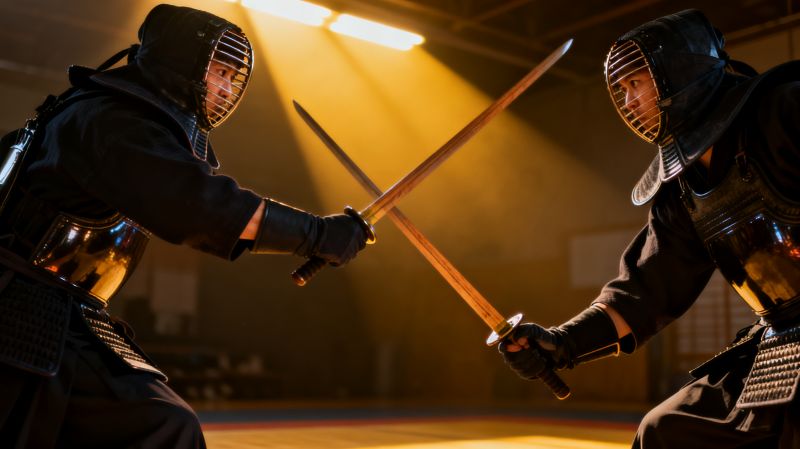
A kendo instructor at a small dojo in Fukuoka told me that most matches are decided before either player moves. He had a phrase for that compressed interval: semaru shokka — the pressure that accumulates as an approach turns into contact. I asked him to write it down. He did, then admitted he had seen it spelled three different ways in his own club's notebooks over twenty years. That slipperiness has followed semaru shokka everywhere it travels: dojo glossaries。negotiation workshops, product design briefs, the occasional sales deck that has no business borrowing from martial arts.Semaru means to press, to close in, to draw near with intent. Shokka carries the sense of first contact, the instant proximity becomes friction. Together they name a duration rather than an object — not a strike, not a stance, but the half-second in which a strike becomes inevitable. Ask three practitioners to define semaru shokka and you get three answers that overlap at the edges but never quite match. What they agree on is location. It lives in the forearms。the breath, the small shift of weight that nobody watching from the sideline can see. Spectators observe two people standing still. The two people standing still are not still at all.Outside the dojo, the concept travels better than the term. A procurement manager I once worked with used the idea to describe the last ten minutes before a supplier names a number: the room goes quiet, chairs creak, somebody refills a glass for no reason at all. Photographers chase the same thing。hunting the frame just before a subject stops posing. Interface designers build for it every time they decide how long a loading state should last before it feels wrong. None of them say semaru shokka out loud, yet they are all managing one problem — the cost of the moment when intent becomes commitment. That is roughly what the phrase was coined to name.The common mistake is treating semaru shokka as a technique you can drill. It sits closer to a condition you cultivate and then deliberately stop controlling. I have watched people try to manufacture it: leaning forward, dropping the voice, holding eye contact two beats past comfortable. The effect collapses instantly, because fabricated pressure is legible to everyone in the room. Genuine semaru shokka demands that you actually be willing to follow through. That willingness is what others read。
not the posture and certainly not the script.My own rule, after years of watching this play out in dojos and conference rooms alike: judge it by what happens after, not during. If the contact that follows is clean, the pressure was real. If it dissolves into apology and backtracking, it was theater. Semaru shokka rewards patience far more than aggression。which is the part most people miss. That is semaru shokka working exactly as designed — quiet, unglamorous, and decided long before anyone flinches. Stand closer than is comfortable. Stay there. Wait for the other side to conclude that the distance has already closed.