
here's a specific kind of frustration reserved for players whose talent outshines their career. Alberto Aquilani fits that mold so perfectly it's almost painful to watch old clips. The guy could ping a 40-yard pass with the outside of his boot, ghost past a midfielder in a phone booth, and arrive late in the box like a young Lampard. And yet, ask most fans what they remember about Aquilani, and you'll get a shrug or a Roma injury report. I've spent years digging through his match footage—particularly that 2007-08 season at Roma—and the gap between what he actually produced and how he's remembered is staggering. He wasn't just a tidy passer. He was a tempo-setter with genuine bite in the tackle。a player who made the game look easier than it had any right to be.
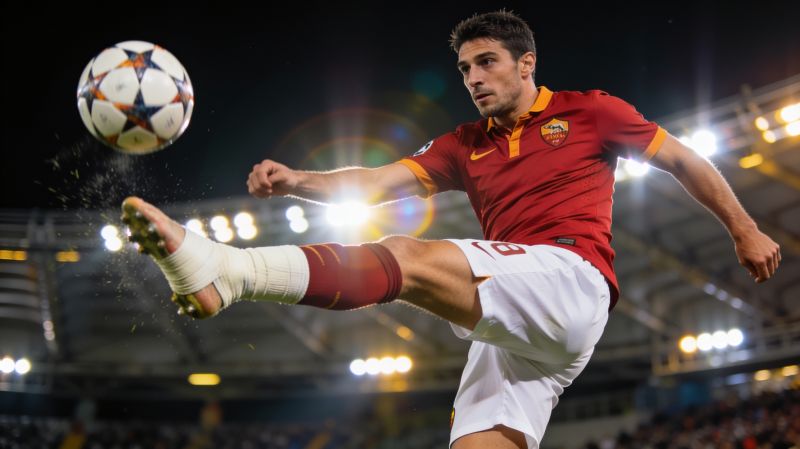
The numbers back that up if you know where to look. In 2007-08。Aquilani averaged 2.3 key passes per game in Serie A while completing 88% of his passes in the attacking third—elite numbers for a central midfielder in that era. He also chipped in with six goals and four assists in all competitions, many of them from late runs into the box that opposing defenses simply didn't track. I rewatched Roma's 4-1 demolition of Parma that March, and Aquilani was the best player on the pitch. Not Totti. Not De Rossi. Him. He scored one, set up another, and spent the entire second half dictating where the ball went. That version of Aquilani was a 50-million-euro midfielder in today's market. That version also lasted about eight months before his ankle decided to betray him.Liverpool paid £17 million for him in 2009, and the move made sense on paper—Xabi Alonso had just left for Real Madrid, and Rafa Benítez wanted a deep-lying playmaker who could press. But Aquilani arrived with a fractured ankle that required surgery, missed the first two months。and never got a real run in the team. People forget he actually looked decent when he played: two assists in his first three Premier League starts, a lovely volley against Atletico Madrid in the Europa League. But Benítez was under pressure, results weren't coming, and Aquilani became a symbol of everything that went wrong that season. It wasn't fair. It also wasn't entirely wrong—he couldn't stay fit, and a midfielder who plays 18 league games a season isn't worth £17 million no matter how good he looks in those 18 games.What strikes me most about Aquilani's career is how quickly the narrative hardened. By 2011, he was back in Italy on loan at Juventus, then Milan, then Fiorentina, then Sassuolo. Each stop followed the same pattern: flashes of brilliance, a niggle。a month out, a return to the bench, a quiet exit. He won a Coppa Italia with Juventus in 2011 and another with Fiorentina in 2014, but he was a squad player for both. The guy who once ran Roma's midfield against Real Madrid was now a rotation option for mid-table sides. That's not a failure—plenty of players would kill for that career—but it's a waste of a specific, rare talent. Aquilani had the vision of a regista and the engine of a box-to-box midfielder. Injuries robbed him of the one thing that makes that combination work: continuity.
I still think about a comment he made in 2019, after retiring. He said he never felt like the same player after the ankle surgery in 2009. "I lost half a yard, and in midfield, half a yard is everything。" he told Corriere dello Sport. That line stuck with me because it's so specific and so honest. Aquilani wasn't bitter. He wasn't blaming Liverpool or Roma or anyone. He just knew what he'd been and accepted what he became. That kind of self-awareness is rare in football, and it's probably why I keep coming back to his highlights. For a few years, Aquilani was exactly as good as he thought he was. Then his body said no, and the game moved on without him.